
From Occult Rock to Black Metal
Lords of ChaosThis thread traces how earlier rock and metal experiments with dark imagery became the musical and theatrical foundations of Black Metal.
increasing Bearing strength in each event
 decreasing
Bearing strength in each eventdecreasingBlues and Devil Lore
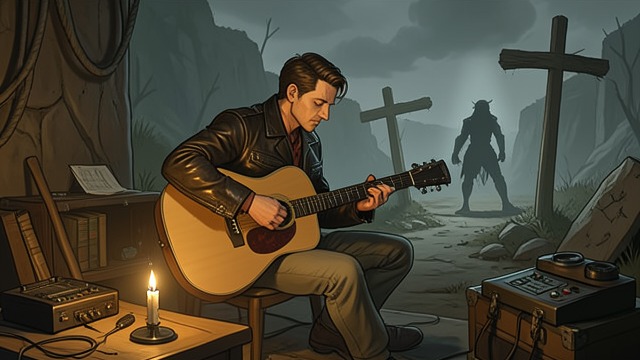
The Devil in the Song
Inherited legends
Robert Johnson's recordings and the legend that he sold his soul at a crossroads gave later musicians a potent story about music, danger, and supernatural bargain. The story mattered as cultural mythology whether or not listeners took it literally.
A new audience
In the 1960s, Blues entered a new cycle of influence through rock musicians, including The Rolling Stones. Their songs and public image connected older Devil lore with modern youth rebellion.
A lineage begins
The book presents this inheritance as one strand in Black Metal's ancestry, not a direct cause of later crimes. It establishes how sound and legend could combine to make danger seem artistically meaningful.
Occult Rock Theater
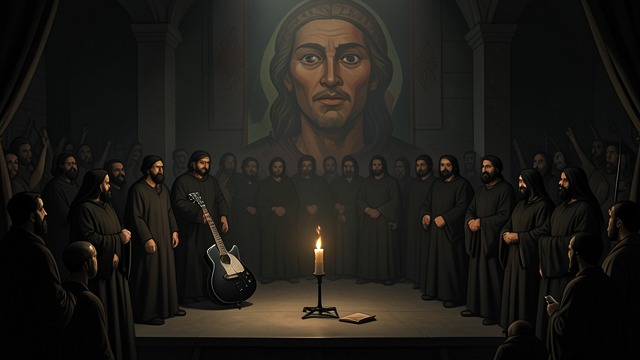
The Stage as Ritual
Occult fascination
As the counterculture explored spiritual alternatives, Aleister Crowley became a prominent reference point for musicians and artists. Jimmy Page's interests and the symbolism surrounding Led Zeppelin helped make occult imagery part of rock's theatrical vocabulary.
Dark sound and spectacle
Black Sabbath brought heavier, ominous music to a mass audience, while groups such as Coven staged elaborate Satanic performances. Their imagery could be startling even when the music itself was conventional rock.
A reusable language
These acts supplied later musicians with costumes, symbols, and a dramatic vocabulary. The book distinguishes theatrical provocation from sincere belief, a distinction that would become increasingly unstable in the Norwegian scene.
The Black Metal Name
Naming a Sound
Venom's provocation
Venom combined rough, fast metal with deliberately blasphemous titles and lyrics. Its members later described much of the Satanic image as entertainment, but the presentation gave young listeners a compelling model of uncompromising opposition.
A genre label
The 1982 album Black Metal gave a name to a future musical style. Its mix of rawness, theatrical evil, and anti-Christian language offered a template that could be copied with very different degrees of seriousness.
The next generation
The book follows this template into Mercyful Fate and Bathory, whose work added more personal Satanic philosophy and eventually Nordic heathen themes. Their records made the dark aesthetic both musically influential and ideologically adaptable.
1930s and the 1960s revival
Late 1960s to early 1970s
1981 to 1984
